Sitting on the plane, my phone already on flight mode, I reached for the in-flight magazine, waiting for take-off. Flipping through the pages, my eye caught an article about how people’s understanding of language and the way they communicate are changing. I checked if my seatbelt was fastened for the umpteenth time, and I tried to block out the video explaining the brace position in some foreign language. For me, a big part of the enjoyment of visiting a foreign country is getting lost in my own thoughts whilst being surrounded by people. In a museum, for example, because I don’t understand the native language, the conversations around me become like white noise, fading into the background. Back home, I sometimes feel as if I am speaking a foreign language, and I find that communicating with those around me is becoming increasingly difficult. I began to read the article, hoping it might give me some insight into my dilemma.
The most important thing in communication is to hear what isn’t being said – Peter Drucker
The author of the article in the in-flight magazine writes that researchers from Kyushu University conducted a study to assess the development of human language comprehension. They showed participants of varying ages a series of nine animations featuring monsters all performing the same action, such as playing the guitar, except in one picture, where the monster did something else, like eating. Afterwards, researchers asked the study subjects, “Did you see that?” The younger participants mostly selected the last picture in the series, whereas the older participants selected the picture that didn’t fit with the others, regardless of where in the sequence it appeared. “Did you see that?” – a phrase we often hear, but how do we know what “that” refers to? Our daily conversations are full of ambiguity, yet communication usually flows smoothly because listeners can identify key cues amid countless possibilities and interpret the speaker’s intent. These cues often include attention-grabbing events or recent happenings. Understanding ambiguous references often requires going beyond the literal meaning to grasp context. It seems people are struggling with this nowadays.
The minute you start putting words on paper, you’re eliminating possibilities – Joan Didion

I’m a sucker for a romantic comedy. I love the plot twists that revolve around misunderstandings and poor communication, which eventually end with the lucky couple kissing and making up. Growing up, my Mom always reminded us to communicate clearly and directly. Early on in my marriage, I decided that, as much as I enjoy a good romcom, I do not want to star in one, so I try to say what is on my mind and not make my husband wonder what is going on. I try to avoid unnecessary drama by never playing mind games, and I never give him the silent treatment. However, somehow my husband still seems to misunderstand me at times. During most of our disagreements, I solemnly declare at some point that “the words coming out of my mouth are not the same as the words going into your ear”. I have no idea how to fix it, and it leaves me so frustrated. I realised that maybe I’m not communicating as clearly as I thought I was. It wasn’t until I was well into adulthood that I became obsessed with Joan Didion’s writing. To me, her appeal is that she writes so comfortably, in a conversational way. She doesn’t adhere to strict rules of grammar and writing; she writes long sentences and says exactly what she means. She does not hide behind big words. I’ve learned to write to my husband, not because I’m romantic but out of pure desperation. I write because I need my words to be understood as I intended, and I want to relay my thoughts in logical order, not scrambled by emotion. It’s not an actual letter, written in cursive on good paper, but I carefully type out long WhatsApp notes for him to read when he has time in his busy day. It’s as if he understands me better when there’s no subtext, like tone of voice and facial expressions, and emotion influencing the conversation.
You write to communicate to the hearts and minds of others what’s burning inside you, and we edit to let the fire show through the smoke – Arthur Plotnik
My directness makes it increasingly difficult to communicate with today’s youth. One would think that for generations who struggle to understand innuendo and ambiguity, a direct communication style would be advantageous. Unfortunately, they find my directness offensive. When communicating with younger people, it feels like I must constantly find softer ways to phrase things. I find it particularly difficult when training the cardiothoracic surgeons of the future and dealing with life-and-death situations. “It is wrong to hold the scalpel like that” must become “let us discuss why it will be better if you hold the scalpel in a different way” – by the time I’ve managed to soften my sentence, the hand holding the scalpel in the wrong way has already cut something it shouldn’t have. And now I have to say “let’s think about how we can fix this problem” rather than “what the #$!@ did you do!!”. Patient presentations sometimes happen over a back-and-forth of WhatsApp messages, and while I’ll admit it’s great to receive a photo of an X-ray or the ventilator screen, young doctors prefer not to follow up their photos with a phone call. I sleep like the proverbial baby and do not wake up to messages pinging during the night. I have made it clear to the registrars that if there is an emergency, they had better call, and still, I sometimes wake up in the morning to a multitude of text messages on my phone, and I wonder whether they are really so scared of talking over the telephone, or maybe they think it will retrospectively absolve them of the consequences of the wrong decisions they made during the night.
Let’s talk about the new AI – artificial intimacy. We have 1000 friends on social, but we don’t have a single person who can feed our cat for us – Esther Perel
While technology has made communication more convenient, it has also changed the quality of our interactions with friends and family. We have adopted the communication style of younger generations so effortlessly. Friends don’t phone each other anymore. They send a quick text message, or, even easier, a GIF of a smiling flower or a meme of a cat. When one sends a text or voice message to share a bit of news and ask how they are, one can easily wait two weeks for a reply. The normal emotional response of a friend hearing your good or bad news is completely lost in the delay between responses. This leaves me feeling extremely alone and unvalidated, and I have started to share less about what is happening in my life with my friends.
I get it. People are busy. But are we really that busy? People are constantly seen holding their phones – clutching them like lifelines and using every spare minute to browse Instagram and Facebook (Yes, I’m old; I only use Instagram and Facebook) – yet they don’t have time to connect with a friend. I’m guilty of not phoning my friends for fear of inconveniencing them. One has to plan around someone’s busy schedule, after all. I used to start with a text saying “let me know when it’s a good time to chat”, but as I became more comfortable with WhatsApp’s voice note feature, I now tend to leave a message with news and questions, and then I patiently wait (sometimes a couple of weeks) for a slightly disjointed but still heartfelt reply. I suppose one can have the false sense that, from posts on social media, one knows what is going on in one’s friends’ lives and does not have to check in so regularly. However, social media is not social at all, and social interactions are increasingly scarce. It is as if we are becoming an autistic society. As if we find comfort in the emotional distance imposed by text messages. As if eye contact and hearing someone’s voice are too close for comfort. Sam Micio writes in his blog, “Why Don’t We Talk to Each Other Anymore?” that internet use has increased while interpersonal social interaction has dwindled. I think people are caught in a vicious cycle of feeling disconnected and alone, and, in pursuit of feeling seen or a sense of belonging, they resort to social media – endlessly scrolling to find something meaningful to relate to, something that will awaken an emotion within them.
The single biggest problem in communication is the illusion that it has taken place – George Bernard Shaw
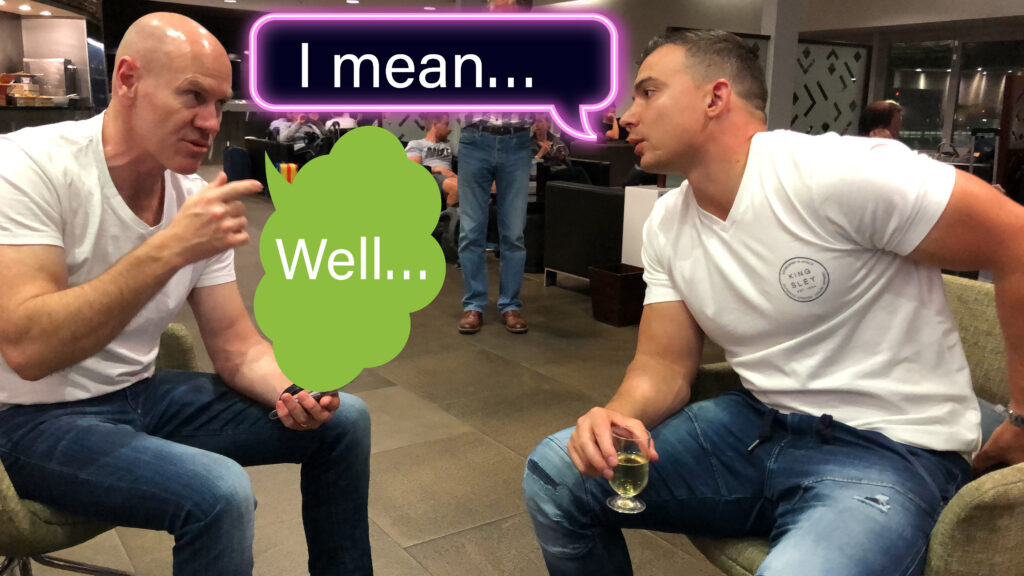
The workplace creates the illusion of social interaction. It consumes one’s time and energy. After a long day of work, talking to people all day, people just aren’t in the mood to chat with friends. In the South African context, where securing necessities like electricity and water is a struggle and has become one’s own responsibility, people probably don’t have the emotional energy left to invest in a “luxury” like friendship. The issue is that the workplace does not provide quality social interaction. Colleagues are not necessarily the people who will show up when one is having a difficult time. I think this illusion of a social circle explains why people often deteriorate suddenly or why they go back to work a few months after retirement – they never pursued relationships with friends and family to sustain them socially, and they cannot cope without the social stimulation of the workplace. I see this often in the medical field, where an old professor is still standing at a patient’s bedside well into his seventies or even eighties. “He will die with a scalpel in his hand,” we often joke, but the truth is these professors have no social life, and often, as a result of a life of long hours at the hospital, no close relationship with family members. And so, instead of being alone, they continue working, some without compensation.
Everyone’s life looks like fun on social media; that’s the sorcery of it. Your soul may be slowly decaying, but there’s a filter for that – unknown
In an episode of the podcast Design Matters, Debbie Millman interviews Mauro Porcini, the president and chief design officer at Samsung. Their conversation turns to artificial intelligence. Porcini explains that the use of AI in the workplace is inevitable. AI is already performing functions that humans used to do, and this will only continue to progress. However, he believes this is a positive development for society, as it frees up our time to do something else. He says the challenge everyone will face is finding happiness and purpose in a world where, currently, what you do defines your identity. He says it will be interesting to see how people spend their free time and how they create a sense of belonging, purpose, and connectedness. This past week, I updated my curriculum vitae for a job application. My husband suggested I use ChatGPT to help me. Reluctant at first, because how can AI know what I have achieved in life, I succumbed to the temptation after a few attempts to make my “professional attributes” section look better on paper. Let me say this: my conversation with ChatGPT about my unique qualities that should stand out more on my CV was the most positive conversation I had in the last three weeks. It makes me think of the classical thought experiment: ‘If a tree falls in a forest and no one is around to hear it, does it make a sound?’ The scientific view is that the action occurred, and therefore, there is a physical sound regardless of whether there is a human ear to hear it. The existential view that answers this philosophical question in terms of human connection is not so clear-cut. Philosophers like George Berkeley argued that to be is to be perceived, meaning that our reality relies entirely on the observer, and so an isolated act that receives no response is meaningless. I suppose time will tell whether we, as a society, realise that we need human connection to feel alive, or whether we rely on ChatGPT or Claude or whatever it is called to make us feel heard. Far-fetched? I used to think so, but maybe not…